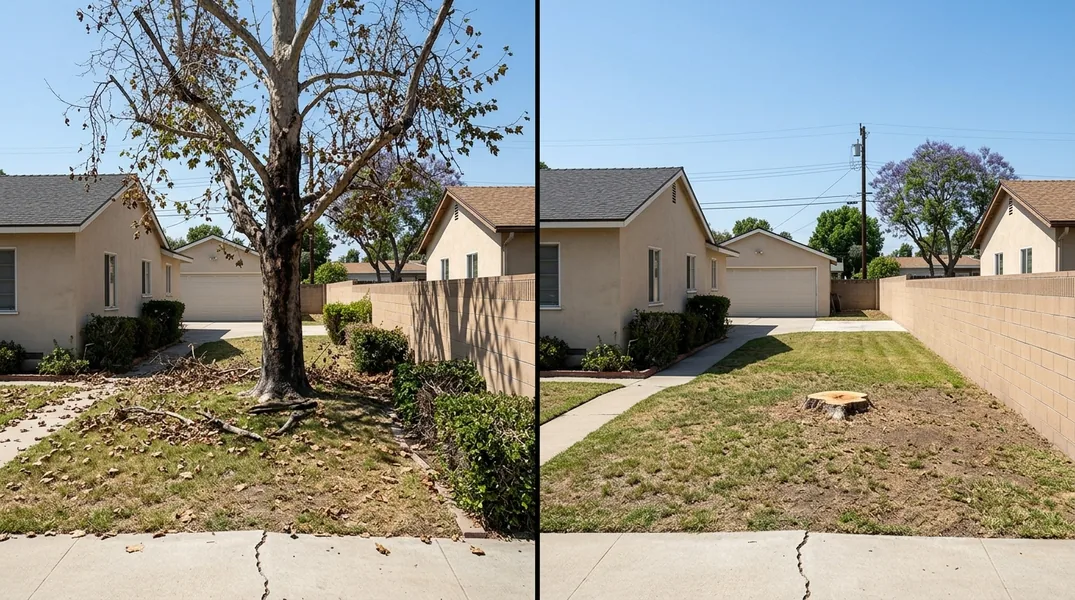
Do You Need a Tree Removal Permit in Anaheim?
Before you hire a contractor or pick up a chainsaw, you need to understand one critical fact: not all trees in Anaheim can be removed without permission. The city has specific regulations that protect certain trees and require permits for removal in many cases. Ignoring these rules can result in fines, citations, and costly compliance work.
In Anaheim, you typically need a tree removal permit if the tree is four inches or larger in diameter at breast height (DBH). This measurement is taken at approximately 4.5 feet above ground level. The permit requirement applies to most residential and commercial properties, though there are some exceptions for dead or hazardous trees that pose an immediate threat to property or safety.
The city's Urban Forest Management Division oversees these permits to maintain the community's tree canopy and environmental health. Getting a permit isn't just bureaucratic red tape, it's a protection for your property and your neighbors. When you work with Tree Removal professionals like Anaheim Tree Service, we handle the permit process for you, ensuring full compliance with local code.
Anaheim Parkway Trees: Special Rules You Must Know
Parkway trees, also called street trees or median trees, are among the most heavily regulated in Anaheim. These are the trees planted in the public right-of-way between the sidewalk and the street, or in medians. Even if a parkway tree is on property you own, you typically cannot remove it without explicit city approval because it's considered public property.
The city maintains strict rules about parkway trees because they provide critical benefits: shade on hot days, stormwater management, air quality improvement, and aesthetic value to the neighborhood. If a parkway tree is diseased, damaged, or creating a genuine hazard, you'll need to submit a request to the city's Parks and Recreation Department or Public Works Division. They will assess the tree and determine whether removal is justified. In some cases, the city will handle the removal itself.
If you're concerned about a parkway tree on your street, don't attempt removal on your own. Contact Anaheim Tree Service at (714) 262-4688 for guidance on the proper process. We can help you document the problem and work with city officials to resolve it safely and legally.
Hillside Lot Tree Removal in Anaheim: Steep Slope Rules
If your property is located in one of Anaheim's hillside areas, you face additional tree removal restrictions. The city has designated certain hillside lots as sensitive zones due to erosion risk, wildfire danger, and slope stability. Trees on these properties often serve a critical function in preventing soil erosion and stabilizing the slope.
Hillside tree removal typically requires a Hillside Development Permit in addition to a standard tree removal permit. The city evaluates whether removing the tree will compromise slope stability or increase erosion risk. In many cases, the city will approve removal only if the tree is dead, diseased, or poses a direct safety threat. If you want to remove a healthy tree on a hillside lot, you may face denial or be required to plant replacement trees or install erosion control measures.
The process can be complex, involving soil engineers, environmental assessments, and detailed site plans. This is where professional guidance becomes invaluable. Anaheim Tree Service understands the unique challenges of hillside properties and can advise you on whether your tree removal is likely to be approved before you invest time and money in the permit application.
What to Check Before You Remove Any Tree
Before you contact a contractor or file a permit application, take time to gather information about the specific tree you want to remove. Start by measuring the diameter at breast height using a measuring tape or caliper. If it's under four inches, you may not need a permit, but always verify with the city first. Larger trees almost always require permits.
Next, determine whether the tree is in a parkway, on a hillside lot, or in a regular residential zone. Walk your property line and check if the tree is on public land or your own property. If you're unsure, the city's Planning Department can help clarify property boundaries and zoning. You should also assess the tree's health. Is it dead, dying, or healthy? Dead trees are often approved for removal more quickly because they pose a safety hazard and provide less environmental benefit.
Document any damage or safety concerns with photographs. If the tree is leaning dangerously, has large dead branches, or is interfering with utilities, these factors strengthen your case for removal. Take photos from multiple angles and note any damage to structures, driveways, or hardscape. This documentation will be helpful when you apply for a permit or consult with a professional arborist.
Finally, check whether your property has any environmental restrictions or is part of a conservation area. Some Anaheim neighborhoods have additional protections for native oak trees or other species. Call Anaheim Tree Service at (714) 262-4688 or request a free estimate to get professional advice tailored to your specific situation.
The Permit Application Process: What to Expect
Once you've determined that a permit is required, the application process typically takes two to four weeks, though complex cases may take longer. You'll need to submit a completed application to the city's Planning Department or the appropriate division handling tree permits. The application requires basic property information, a description of the tree, the reason for removal, and often a site plan showing the tree's location.
Many applicants hire an arborist to provide a professional assessment supporting the removal request. An arborist's report carries significant weight with city officials, especially if the tree is diseased or hazardous. The report documents the tree's condition and explains why removal is necessary. This step adds cost but increases your chances of approval, particularly for borderline cases.
After you submit the application, a city inspector may visit your property to evaluate the tree in person. They'll verify the measurements, assess the tree's health, and determine whether the removal meets city criteria. If everything is in order, you'll receive approval and can proceed with hiring a contractor. If there are issues, you may be asked for additional information or a revised plan.
Anaheim Tree Service can guide you through this entire process and coordinate with city officials on your behalf. We've completed hundreds of permitted removals in Anaheim and understand exactly what inspectors are looking for and how to present your case effectively.
Orange County Tree Removal Rules: Regional Context
While this article focuses on Anaheim regulations, it's helpful to know that other cities in Orange County have similar but not identical rules. Fullerton, Garden Grove, and other nearby communities all protect trees to varying degrees, but the specific diameter thresholds, permit processes, and protected species may differ.
If you're moving between cities or own property in multiple jurisdictions, don't assume the rules are the same everywhere. What's permitted in one city may require a permit in another. This is why it's essential to check with the specific city where your tree is located. When you work with Anaheim Tree Service, we're familiar with regulations across the region and can advise you accurately no matter where your property is located.
For the most current and detailed information about Anaheim's specific tree removal rules, you can contact the city's Planning Department or Urban Forest Management Division directly. However, for practical advice and a clear path forward, the team at Anaheim Tree Service is ready to help. Call (714) 262-4688 today to discuss your situation.
Looking for a professional tree service contractor in Anaheim? Anaheim Tree Service responds fast for all your tree service needs.
Get a Free QuoteOur services: Tree Removal · Tree Trimming & Pruning · Stump Grinding